ExiTide prints an amount beside every ingredient and a ratio or standardisation percentage beside every extract. That is rarer than it should be in this category and genuinely to the brand's credit. It also means the formula can be checked line by line — which is what this page does.
The short answer
Eleven ingredients totalling 442 mg plus 2 billion CFU. Cinnamon at a 10:1 ratio and riboflavin at 1,470% DV are delivered at genuinely meaningful amounts. Prickly pear is close. Everything else — berberine, glucomannan, alpha lipoic acid, curcumin, resveratrol — sits between 1% and 4% of the doses used in published research.
The ExiTide ingredient table
| Ingredient | On the label | Used in research | Share |
|---|---|---|---|
| Mangosteen Powder | 100 mg | Extracts typically studied at 400–1,000 mg/day | ~25% |
| Prickly Pear Extract Powder (4:1) | 100 mg | ≈400 mg raw equivalent; studies use 500–1,000 mg/day | ~55% |
| Cinnamon Bark Extract (10:1) | 100 mg | ≈1,000 mg raw equivalent; studies use 500–2,000 mg/day | Lands |
| Konjac Extract Fibre (90% Glucomannan) | 50 mg (≈ 45 mg glucomannan) | 1,000 mg before each meal; 3,000 mg/day (EFSA) | ~2% |
| Riboflavin (Vitamin B2) | 25 mg (1,470% DV) | 1.1–1.3 mg/day RDA | Lands |
| Alpha Lipoic Acid | 25 mg | 600–1,800 mg/day | ~4% |
| Turmeric Extract (95% Curcumin) | 15 mg (≈ 14 mg curcumin) | 500–2,000 mg/day curcuminoids | ~3% |
| Berberine HCl | 15 mg | 500 mg two to three times daily (1,000–1,500 mg/day) | ~1% |
| Resveratrol Extract (20% from Polygonum cuspidatum) | 12 mg (≈ 2.4 mg resveratrol) | 150–500 mg/day trans-resveratrol | ~2% |
| Bifidobacterium breve | 1 billion CFU | 1–10 billion CFU/day, strain-specific | ~40% |
| Akkermansia muciniphila | 1 billion CFU (live) | 10 billion CFU/day, pasteurised, for 3 months | ~10% |
The two numbers that decide this product
Berberine, 15 mg. Human trials use 500 mg two or three times a day, 1,000 to 1,500 mg in total, and berberine's oral bioavailability is under 1% — which is precisely why the research uses gram-level split doses. Fifteen milligrams taken once daily is one per cent of the studied amount before absorption is even considered.
Glucomannan, about 45 mg. The konjac extract is 50 mg standardised to 90% glucomannan. The European Food Safety Authority authorised the weight-loss claim for glucomannan only at 1,000 mg per serving, three servings a day, taken with water before meals. ExiTide delivers roughly one sixty-seventh of the daily amount. Glucomannan works by physically forming a gel — a mechanism that depends entirely on volume — so this is not a smaller version of the same effect. It is a different thing.
Comparing ExiTide bundles
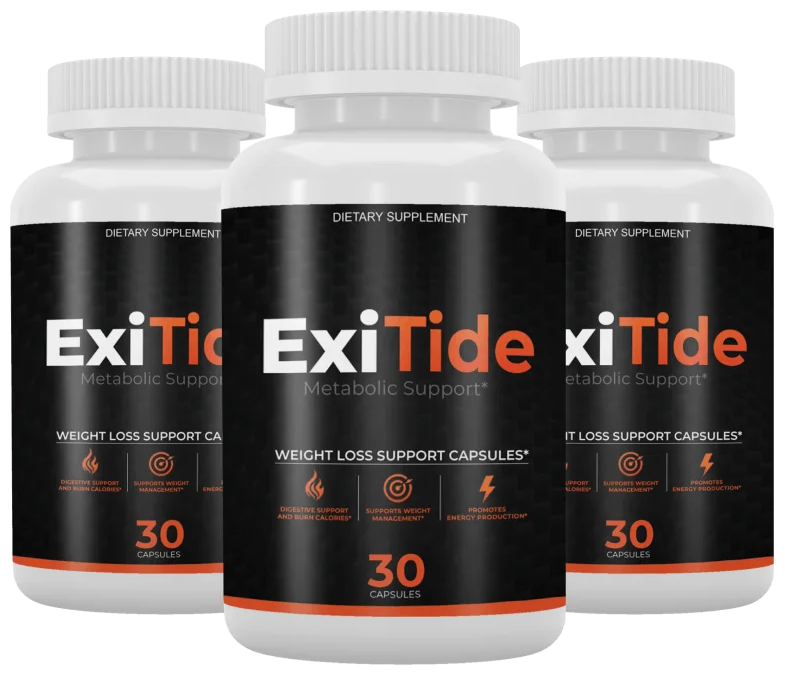
The ExiTide discount is applied by bundle size: $79 a bottle for two, $69 for three and $49 for six. Three bottles is the pack that covers a fair 8-to-12-week trial and ships free.
Check ExiTide Bundle PricesOfficial website checkout · confirm your guarantee window before paying
Where the label genuinely lands
Two lines deserve real credit. Cinnamon bark extract at 10:1, 100 mg is roughly a 1,000 mg raw equivalent, inside the range used in glucose and lipid trials — the extract ratio doing exactly the job it should. Riboflavin at 25 mg is about twenty times the Daily Value and is unambiguously a real dose of a real nutrient.
The riboflavin deserves one extra sentence, because it explains something users notice on day one. Surplus B2 is excreted in urine and turns it vivid fluorescent yellow within a few hours. That visible change is frequently read as evidence the product is working. It is evidence you took a B vitamin.
Every ingredient, examined
1. Mangosteen Powder — 100 mg
Xanthone-rich tropical fruit powder, joint largest line on the panel.
Mangosteen pericarp contains alpha-mangostin and related xanthones, which have antioxidant and anti-inflammatory activity in laboratory work. Human research is thin and mostly uses concentrated extracts at 400 mg or more per day, often as juice or standardised pericarp extract. This panel lists plain powder with no xanthone standardisation, so the active content cannot be worked out from the label. Treat it as a general antioxidant contribution rather than a weight-loss ingredient with a dose behind it.
Worth knowing: May slow blood clotting at high intakes; mention it if you take anticoagulants. · NCCIH on mangosteen
2. Prickly Pear Extract Powder (4:1) — 100 mg
Cactus fibre and betalain source; the 4:1 ratio genuinely helps here.
This is one of the places where ExiTide's dosing is more defensible than it first looks. A 4:1 extract means four parts raw material were concentrated into one part powder, so 100 mg is roughly equivalent to 400 mg of dried prickly pear. That lands within touching distance of the amounts used in small human studies on lipid binding and post-meal glucose, which typically run from 500 mg upward. The evidence base itself is modest — small trials, mixed endpoints — but the dose is not the weak point.
Worth knowing: Can cause mild loose stools when fibre intake rises quickly. · Prickly pear research on PubMed
3. Cinnamon Bark Extract (10:1) — 100 mg
The one botanical here delivered at a genuinely research-comparable amount.
At a 10:1 concentration, 100 mg of extract is roughly equivalent to 1,000 mg of cinnamon bark — squarely inside the 500–2,000 mg range used in glucose and lipid trials. Credit where it is due: this is the line where the extract ratio does the job the milligram figure alone would fail. Two caveats remain. The panel does not say whether this is cassia or Ceylon cinnamon, which matters because cassia carries coumarin. And cinnamon's own trial results for weight are inconsistent even at full dose — the stronger signal is post-meal glucose, not fat loss.
Worth knowing: Cassia cinnamon contains coumarin; relevant to liver load at sustained high intakes. · NCCIH cinnamon fact sheet
4. Konjac Extract Fibre (90% Glucomannan) — 50 mg (≈ 45 mg glucomannan)
The satiety ingredient — and the widest gap on the entire panel.
Glucomannan is the reason this category talks about feeling full. It works mechanically: taken with a large glass of water before a meal, it absorbs many times its weight and forms a viscous gel that slows gastric emptying. The European Food Safety Authority authorised a weight-loss claim for it, but only at 1 g per serving, three times a day, with water, before meals. ExiTide's 50 mg of konjac extract at 90% glucomannan delivers about 45 mg — roughly one twenty-second of a single studied dose, and one sixty-seventh of the daily amount. This is not a question of whether the ingredient works. It is a question of whether 45 mg can form a gel big enough to matter, and physically it cannot.
Worth knowing: At real doses glucomannan must be taken with a full glass of water; at 45 mg the choking risk is not a practical concern. · Glucomannan weight-loss RCT (J Obes)
5. Riboflavin (Vitamin B2) — 25 mg (1,470% DV)
The only megadose on the label — and the source of the bright yellow urine.
At 25 mg this is roughly twenty times the adult Daily Value, and it is the one ingredient in ExiTide delivered far above a research-relevant amount. Riboflavin is genuinely essential: it is required for the enzymes that release energy from food. What it does not do is cause weight loss in people who are already B2-replete, which most people eating a normal diet are. It is worth knowing why this matters. Excess riboflavin is excreted in urine and turns it bright fluorescent yellow within a few hours of the first capsule. That visible change is often read as proof the product is ‘working’. It is proof you took a B vitamin.
Worth knowing: Harmless at this level; the vivid urine colour is expected, not a warning sign. · NIH ODS — Riboflavin
6. Alpha Lipoic Acid — 25 mg
Antioxidant studied for insulin sensitivity and neuropathy — at 24× this dose.
Alpha lipoic acid has a real clinical literature, particularly for diabetic peripheral neuropathy and to a lesser extent for modest weight change. Those trials run at 600 mg to 1,800 mg a day, frequently intravenously in the neuropathy work. ExiTide provides 25 mg, about 4% of the lowest oral study dose. ALA is also unstable and best absorbed on an empty stomach, which sits awkwardly with an instruction to take the capsule shortly before eating.
Worth knowing: Can add to the glucose-lowering effect of diabetes medication at study doses. · ALA weight trials on PubMed
7. Turmeric Extract (95% Curcumin) — 15 mg (≈ 14 mg curcumin)
Well-standardised, badly under-dosed, and poorly absorbed without piperine.
The standardisation here is good — 95% curcuminoids is the grade used in research. The amount is not: 15 mg of extract yields about 14 mg of curcuminoids against study doses of 500 mg and up. Curcumin also has famously poor oral bioavailability, which is why trials pair it with piperine or use phytosome and liposomal delivery systems. Neither appears on this label, so the fraction of that 14 mg that reaches circulation is smaller again.
Worth knowing: May add to blood-thinning medication and can aggravate gallbladder problems at high doses. · NCCIH turmeric overview
8. Berberine HCl — 15 mg
The headline metabolic ingredient, at 1% of the dose that made it famous.
Berberine is the ingredient doing most of the marketing work in this category, and it has genuine human evidence for glucose and lipid handling. The standard evidence-based dose is 500 mg two to three times a day, totalling 1,000 to 1,500 mg. ExiTide contains 15 mg — one per cent of the upper figure. The gap widens further once absorption is taken into account: berberine's oral bioavailability is under 1%, which is exactly why trials use gram-level doses split across the day. Fifteen milligrams once daily is a label mention, not a metabolic intervention.
Worth knowing: Interacts with metformin, other glucose-lowering drugs and CYP-metabolised medicines at real doses. · Berberine evidence summary (Examine)
9. Resveratrol Extract (20% from Polygonum cuspidatum) — 12 mg (≈ 2.4 mg resveratrol)
The smallest true dose on the panel once the 20% standardisation is applied.
This line rewards reading carefully. The panel says 12 mg of extract standardised to 20% resveratrol, which means roughly 2.4 mg of actual resveratrol per capsule. Human trials of resveratrol for metabolic endpoints use 150 mg to 500 mg a day. The 2.4 mg here is a rounding error against that, and it is a useful demonstration of why extract percentages matter as much as milligram figures on any label you are asked to trust.
Worth knowing: May add to anticoagulant effects at study doses; no practical concern at 2.4 mg. · Resveratrol metabolic trials
10. Bifidobacterium breve — 1 billion CFU
A mainstream probiotic species at the low end of a normal range.
B. breve is a well-studied genus with a reasonable safety record, and 1 billion CFU sits at the bottom of the range used in probiotic research, which usually runs from 1 to 10 billion CFU a day. The catch is that probiotic effects are strain-specific — B. breve B-3 has weight-related data, other B. breve strains do not — and this panel names no strain. Without a strain designation, no published result can be attached to what is in this capsule.
Worth knowing: Generally well tolerated; people who are immunocompromised should ask a doctor first. · NCCIH probiotics overview
11. Akkermansia muciniphila — 1 billion CFU (live)
The most interesting ingredient here, at the wrong dose and possibly the wrong form.
Akkermansia is the genuinely exciting name on this panel. The pivotal human trial gave overweight, insulin-resistant volunteers 10 billion CFU a day for three months and reported improved insulin sensitivity, lower fasting insulin and modestly lower cholesterol. Two details matter enormously. First, ExiTide provides 1 billion CFU — a tenth of that dose. Second, and more important, the benefits in that trial came from the pasteurised (heat-treated) form; the live form produced only mild, borderline results. Akkermansia is also a strict anaerobe, which raises a fair shelf-stability question for a live culture in a room-temperature capsule.
Worth knowing: No safety signal reported in the human trial; ask a doctor first if immunocompromised. · Depommier 2019, Nature Medicine
What the pattern tells you
Read down the table and the shape is clear. The ingredients with the strongest metabolic research — berberine, glucomannan, alpha lipoic acid, curcumin, resveratrol — are all present far below their studied doses. The ingredients delivered at meaningful amounts are cinnamon, prickly pear and a B vitamin. The two probiotic species are at the bottom of a normal range, unnamed by strain, and the Akkermansia research that makes that ingredient exciting used ten times the CFU count in a pasteurised form rather than a live one.
None of that is a scandal; it describes most of this category, and the one-capsule format makes it close to unavoidable. It does set expectations. If you buy ExiTide expecting the effects reported in the berberine literature, you have bought one per cent of the dose that produced them. If you buy it as a daily contribution of fibre, cinnamon polyphenols, B2 and probiotics alongside a deficit you are creating yourself, the label supports that reading exactly.
Allergens, sensitivities and interactions
- Glucose-lowering medication: berberine, cinnamon and alpha lipoic acid can all add to the effect. Small amounts here, but tell your pharmacist.
- Blood thinners: turmeric, mangosteen and resveratrol can add to anticoagulant effects at higher intakes.
- Immunocompromise: the formula contains two live bacterial cultures — ask a doctor first.
- Digestive sensitivity: fibre plus polyphenols plus live cultures can cause bloating or looser stools in the first week.
- Capsule shell: hypromellose, which is plant-derived rather than gelatin.
- Caffeine: none in the formula at all.
Read how these ingredients work together, or see the benefits the formula can reasonably support.
Frequently asked questions
What are the ingredients in ExiTide?
Riboflavin 25 mg (1,470% DV), Mangosteen Powder 100 mg, Prickly Pear Extract 4:1 100 mg, Cinnamon Bark Extract 10:1 100 mg, Konjac Extract Fibre (90% glucomannan) 50 mg, Alpha Lipoic Acid 25 mg, Turmeric Extract (95% curcumin) 15 mg, Berberine HCl 15 mg, Resveratrol Extract (20%) 12 mg, Bifidobacterium breve 1 billion CFU and Akkermansia muciniphila 1 billion CFU.
Are the ExiTide doses high enough to work?
Cinnamon at a 10:1 ratio and riboflavin are at genuinely meaningful amounts, and prickly pear is close. Berberine is at about 1% of its studied dose, glucomannan at roughly 1.5%, curcumin at 3% and alpha lipoic acid at 4%.
How much glucomannan is in ExiTide?
About 45 mg — 50 mg of konjac extract standardised to 90% glucomannan. The EFSA-authorised weight-loss protocol uses 1,000 mg three times a day with water before meals.
Does ExiTide contain caffeine or stimulants?
No. There is no caffeine, synephrine or any other stimulant in the formula.
ExiTide Official Website
per bottle on the 6-bottle bundle · free US shipping on 3 and 6
Check Current Price Sold through the official checkout only